
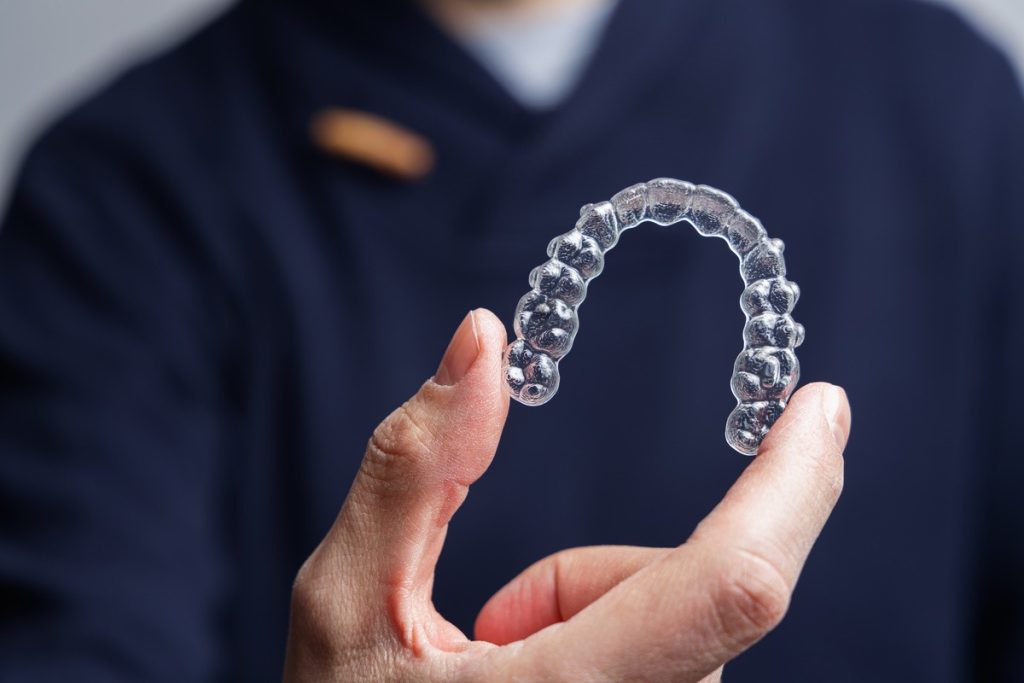
If you’ve been considering straightening your teeth, you’ve probably come across clear aligners as a modern alternative to metal braces. They’ve become one of the most popular orthodontic options for adults and teens, and for good reason — they’re discreet, removable, and effective for a wide range of alignment concerns. But before you commit to treatment, it helps to understand exactly how the process works, what it involves day to day, and whether clear aligners are the right fit for your situation.
At Evergreen Grace Dental Care in Renton, Dr. Bartolo España provides clear aligner treatment as part of our broader cosmetic dentistry services. This guide walks through every stage of the process so you can walk into your consultation already informed.
What Are Clear Aligners and How Do They Move Teeth?
Clear aligners are custom-fabricated, transparent plastic trays that fit snugly over your teeth. Each tray is designed to apply gentle, controlled pressure to specific teeth, nudging them incrementally toward their target positions. You wear each set for about one to two weeks before moving on to the next tray in the series.
The key principle is the same as traditional braces: sustained, calibrated force over time causes teeth to shift through the surrounding bone. What makes aligners different is that the force is applied by a smooth, removable tray rather than metal brackets and wires. Research published through the National Library of Medicine confirms that clear aligners can achieve results comparable to traditional braces for mild to moderate malocclusions when worn as prescribed.
The Clear Aligner Process: Stage by Stage
Understanding the full treatment arc helps set realistic expectations and makes each stage feel manageable rather than uncertain.
Stage 1: Consultation and Candidacy Evaluation
The process starts with a thorough evaluation of your bite, spacing, crowding, and overall oral health. Dr. España reviews your tooth positions, jaw alignment, and gum health to determine whether clear aligners can achieve your goals or whether a referral to an orthodontic specialist would produce a better outcome. Not every case is suitable for aligners — complex bite corrections or severe crowding sometimes require a different approach, and Dr. España will always be direct with you about what will actually work for your situation.
Stage 2: Digital Scanning and Treatment Planning
Once you’re confirmed as a candidate, we use intraoral digital scanning — no messy impression material — to capture a precise 3D model of your teeth. This data feeds into planning software that maps out each stage of tooth movement throughout your treatment. You can see a digital preview of your projected result before a single tray is manufactured, which helps you understand the timeline and expected outcome before committing.
Stage 3: Receiving and Wearing Your Aligners
Your custom tray series is fabricated and delivered to our office. You’ll receive multiple sets at once and switch them on a set schedule — typically every one to two weeks depending on your plan. Aligners must be worn 20 to 22 hours per day. They come out only for eating, drinking anything other than water, brushing, and flossing. Consistency is everything: patients who wear their aligners as prescribed finish on schedule; those who don’t extend their timeline and risk less predictable results.
Stage 4: Progress Appointments
You’ll visit Dr. España periodically — typically every six to eight weeks — so he can confirm your teeth are tracking as planned and make any adjustments needed. These appointments are brief but important. If your teeth aren’t moving as expected, the plan can be modified before the issue compounds.
Stage 5: Retainers and Long-Term Maintenance
Once your final tray is complete, the active phase of treatment is done — but the work isn’t over. Teeth naturally drift back toward their original positions without something holding them in place. Dr. España will provide a custom retainer and a wear schedule, typically starting with full-time use and gradually transitioning to nighttime-only wear as your results stabilize. Consistent retainer use is what keeps your results looking the way they did on the day you finished treatment.
What Conditions Can Clear Aligners Treat?
Clear aligners are most effective for mild to moderate orthodontic concerns. Common conditions that respond well to aligner therapy include:
- Crowded teeth — where insufficient space causes teeth to overlap, making thorough cleaning more difficult
- Spacing and gaps — excess space between teeth, whether cosmetic or functional
- Mild overbite or underbite — where upper and lower teeth don’t meet correctly
- Crossbite — where some upper teeth sit inside the lower teeth
- Relapse from prior treatment — teeth that have shifted after braces due to inconsistent retainer use
More complex cases — significant jaw discrepancies, severe bite problems, or cases requiring tooth extractions as part of the plan — may be better served by a referral to an orthodontic specialist. Dr. España is upfront about the boundaries of aligner therapy and will only recommend it when it’s genuinely the right tool for the job.
What Does Treatment Feel Like Day to Day?
Most patients adapt to wearing aligners within the first few days. The trays are smooth and don’t have any sharp edges, so there’s no bracket irritation or wire poking. You may notice mild pressure for the first day or two after switching to a new set — that’s a sign the teeth are beginning to move and typically fades quickly.
Eating is completely unrestricted since you remove the trays for meals. Oral hygiene is straightforward — brush and floss normally, rinse the trays, and you’re done. Many patients say they appreciate the routine: aligners in, aligners out, clean, repeat.
Speech may be slightly affected in the first few days as your tongue adjusts to the presence of the trays. This resolves on its own for the vast majority of patients within a week.
How Long Does Clear Aligner Treatment Take?
Treatment length varies based on the complexity of your case and how consistently you wear your aligners. General timelines:
- Minor corrections (small gaps, mild relapse): 3 to 6 months
- Moderate crowding or spacing: 6 to 12 months
- More complex cases: 12 to 18 months
Dr. España will give you a projected timeline at your consultation based on the digital treatment plan. The timeline assumes consistent aligner wear — skipping hours adds up quickly and can extend treatment by weeks or months.
Is Clear Aligner Treatment Right for You?
Clear aligners work well for a wide range of patients but aren’t a universal solution. You’re likely a good candidate if you have mild to moderate alignment concerns, healthy gums and bone structure, no untreated active decay, and the discipline to wear your aligners consistently. Teenagers who are reliable and motivated can also be strong candidates.
Patients with significant dental anxiety about the commitment, active gum disease, or very complex bite issues may need a different path. Dr. España covers all of this thoroughly at your consultation so you leave with a clear picture of your options before making any decisions.
Frequently Asked Questions About How Clear Aligners Work
How long does clear aligner treatment typically take?
Minor corrections often take 3 to 6 months, moderate crowding or spacing 6 to 12 months, and more complex cases 12 to 18 months, depending on how consistently the aligners are worn.
How many hours a day do I need to wear my aligners?
Aligners must be worn 20 to 22 hours daily, removed only for eating, drinking anything other than water, brushing, and flossing.
Will clear aligners work for my specific case?
Aligners are most effective for mild to moderate concerns like crowding, spacing, or mild bite issues. More complex cases may be better served by a referral to an orthodontic specialist.
Do I need to wear a retainer after treatment?
Yes. A custom retainer with a wear schedule is provided after treatment to keep your teeth from drifting back toward their original positions.
Is treatment uncomfortable?
Most patients feel mild pressure for a day or two after switching to a new tray, and speech may be briefly affected during the first week as your tongue adjusts.
If you’re ready to find out whether clear aligners are the right fit for your smile, schedule a consultation with Dr. España at Evergreen Grace Dental Care in Renton. We’ll walk through your digital scan, your projected timeline, and your options — so you have everything you need to decide with confidence.